THROUGH THE STORM
LIVING responsibly in a fractured era
“Liberty, once lost, is lost forever.”
~ John Adams
Thanks for helping get this book published — 2 short polls and a 30 second reader survey
Something in our society is breaking
The signs are everywhere—widening economic and social division, rising distrust, political fracture, and institutions struggling to hold.
Yet most explanations focus only on the headlines. Few examine the deeper forces building beneath them.
This book breaks down those complex forces and explains:
why instability increases in certain periods
the historical cycles behind crisis seasons
the economic and political pressures building beneath the surface
how individuals can think clearly and act responsibly in uncertain times.
Facing Crisis explores how these pressures develop, why they are intensifying now, and what it means for our future.
Are you concerned with the current state of the US?
Before reading further, share your perspective in The People’s Poll 🇺🇸
*All Survey and Poll responses may be used in aggregated and anonymous form for research, analysis, or discussion related to this project.
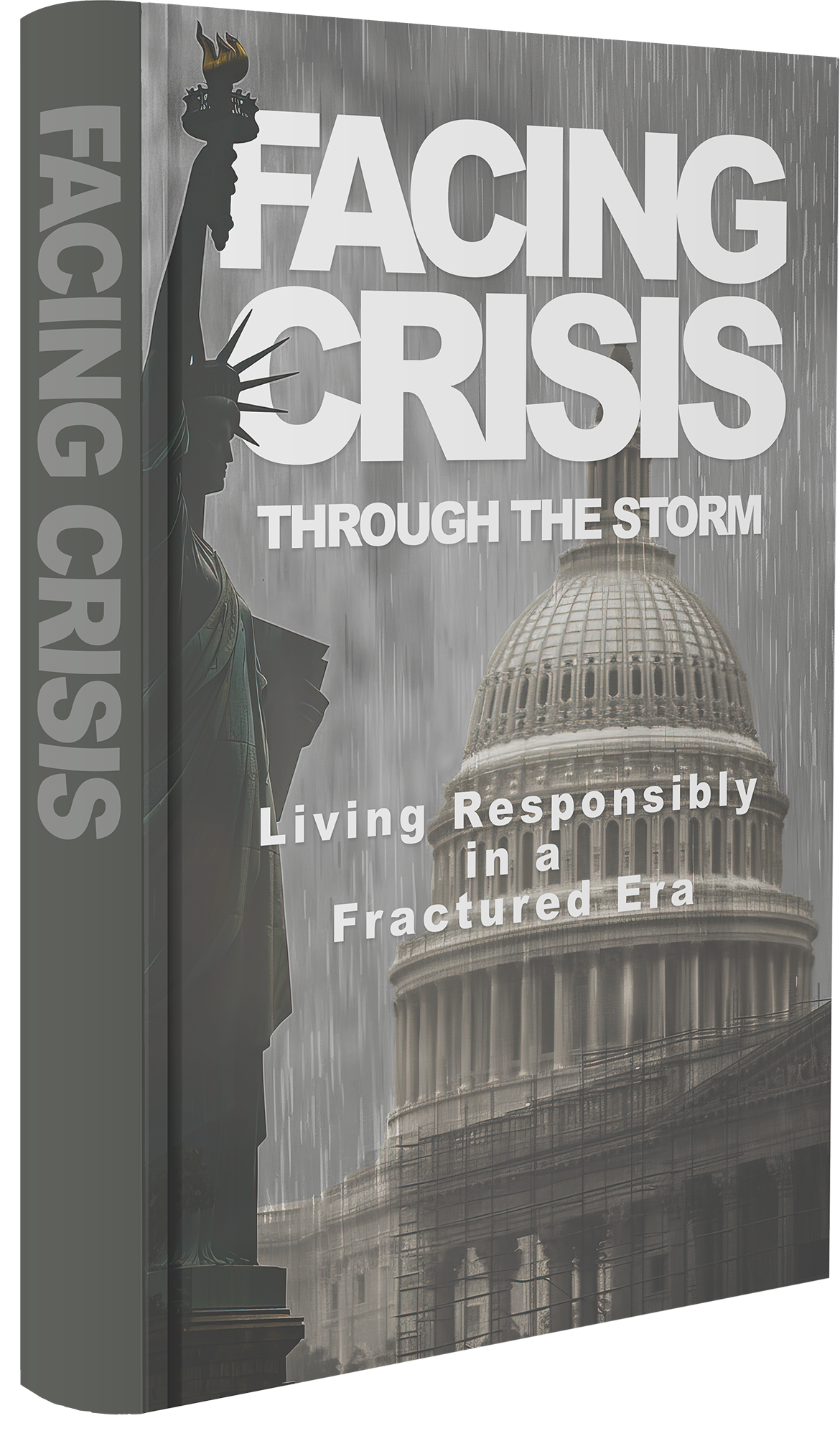
Help get this book published
Your response will help guide the development of this book.
After browsing the preview, please share your thoughts on the project.
30-Second Reader Poll 👇
UNDERSTANDING THE STORM
Part I — Orientation
Excerpt from Chapter 1
Facing Crisis begins with a simple claim: that we are living inside a prolonged crisis season—and that understanding this moment begins with recognition and acknowledgment.
What many people are experiencing is not anxiety without cause. It is pressure without language. The strain is real, and for many it has become constant. Recognition comes first. We feel it before we fully understand it.
The United States entered what can be called a crisis season nearly two decades ago—a period when pressures accumulate across institutions, economies, and communities.
A crisis season is not defined by a single shock. Shocks will come—conflicts, collapses, reversals, even temporary recoveries. The defining feature is duration: long enough for fatigue to set in, long enough for illusions of rescue to fail—out lasting administrations, and long enough for responsibility to become unavoidable.
This book will not tell you how this season ends. It will not offer predictions, timelines, or guarantees. It will not pretend that awareness alone produces good outcomes, or that history reliably rewards those who see clearly.
It will do something more limited—and more durable.
It will help you orient yourself inside a crisis season, understand what remains within your control, and decide how to carry responsibility when outcomes are uncertain.
WE SEE AND FEEL THE EFFECTS, BUT What IS THE CAUSE OF THIS CRISIS?
What if economic and social divides are a cause not an effect?
What if elected Presidents are an effect and not the cause?
Is technology a force multiplier—compounding the crisis?
If this moment is part of a recurring pattern what can we expect?
Part II — Patterns of Crisis
Excerpt from Chapter 5: Historical Cycle Frameworks
Why does everything seem to be unraveling at the same time?
Politics. Economics. Institutions. Culture. Is the convergence of these forces accelerated by technology?
Is it random chaos—or part of a larger pattern?
“History never repeats itself, but it does often rhyme.”— Mark Twain
History does not move in a straight line. Societies tend to move through recurring seasons.
Long periods of stability allow institutions to grow strong, but they also allow hidden pressures to accumulate. Debt expands. Competition for power increases. Public trust slowly weakens. Eventually those pressures force a period of crisis and restructuring.
Researchers from many fields have noticed the same pattern. They use different terms, but they describe the same four stages: stability, strain, fragmentation, and crisis. These phases are often described using the language of storms and seasons.
This book explains those patterns—and why signs from multiple domains are converging at this particular moment.
Several well-known frameworks illustrate this pattern. A simplified comparison appears below.
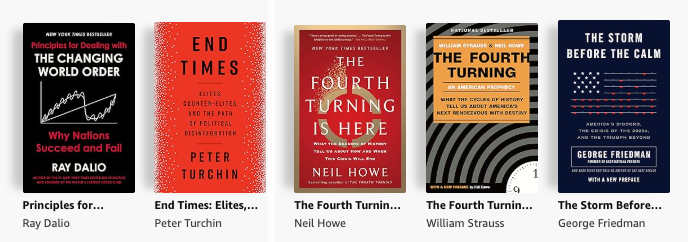
Influential works referenced in this research.
SYNTHESIZED RESEARCH PHASE TABLE
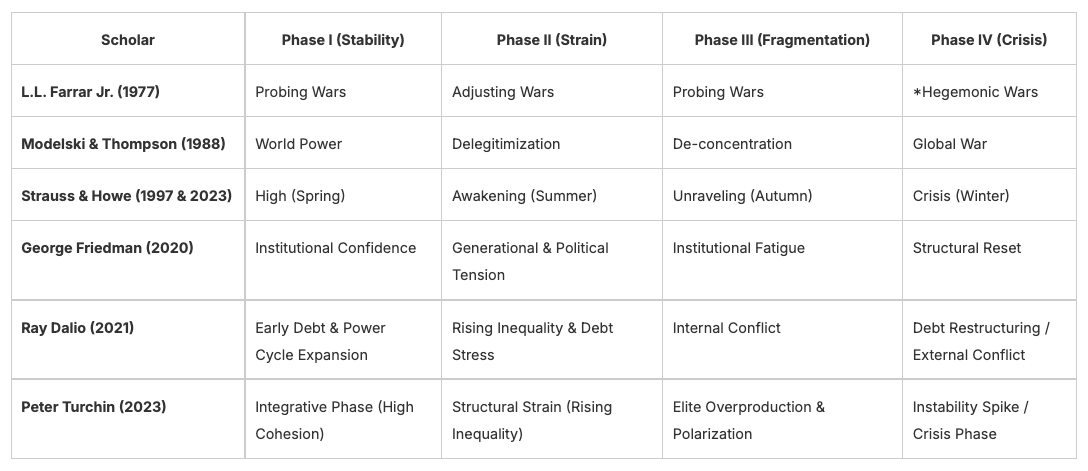
*Hegemonic Wars: Wars that fundamentally reshape the world order.
Why Leaders Don’t Stop THE FRACTURE
Excerpt from Chapter 8:
History suggests that in fractured eras, leaders do not rescue societies from the storm. They are chosen by societies already in it. The decisive variable is not who holds office—but how citizens adapt, endure, and take responsibility for what remains within their control.
“Never let a good crisis go to waste.”
As society is quickly learning, chosen leaders—no matter the party, often take advantage of crises to move agendas forward. And seldom deliver meaningful solutions to The People.
Waiting idly for the next election isn’t a winning strategy — proactive personal engagement , planning, and decisive action are what lead to real progress and desired outcomes.
Personally, professionally, and as a society, we have the same opportunity to use this season to our advantage.

HOW WE MOVE THROUGH THE STORM?
What if crisis seasons are a function of renewal not destruction?
What if personal action influences outcome more than we believe?
How me move through the storm will determine how we stand in the next season.
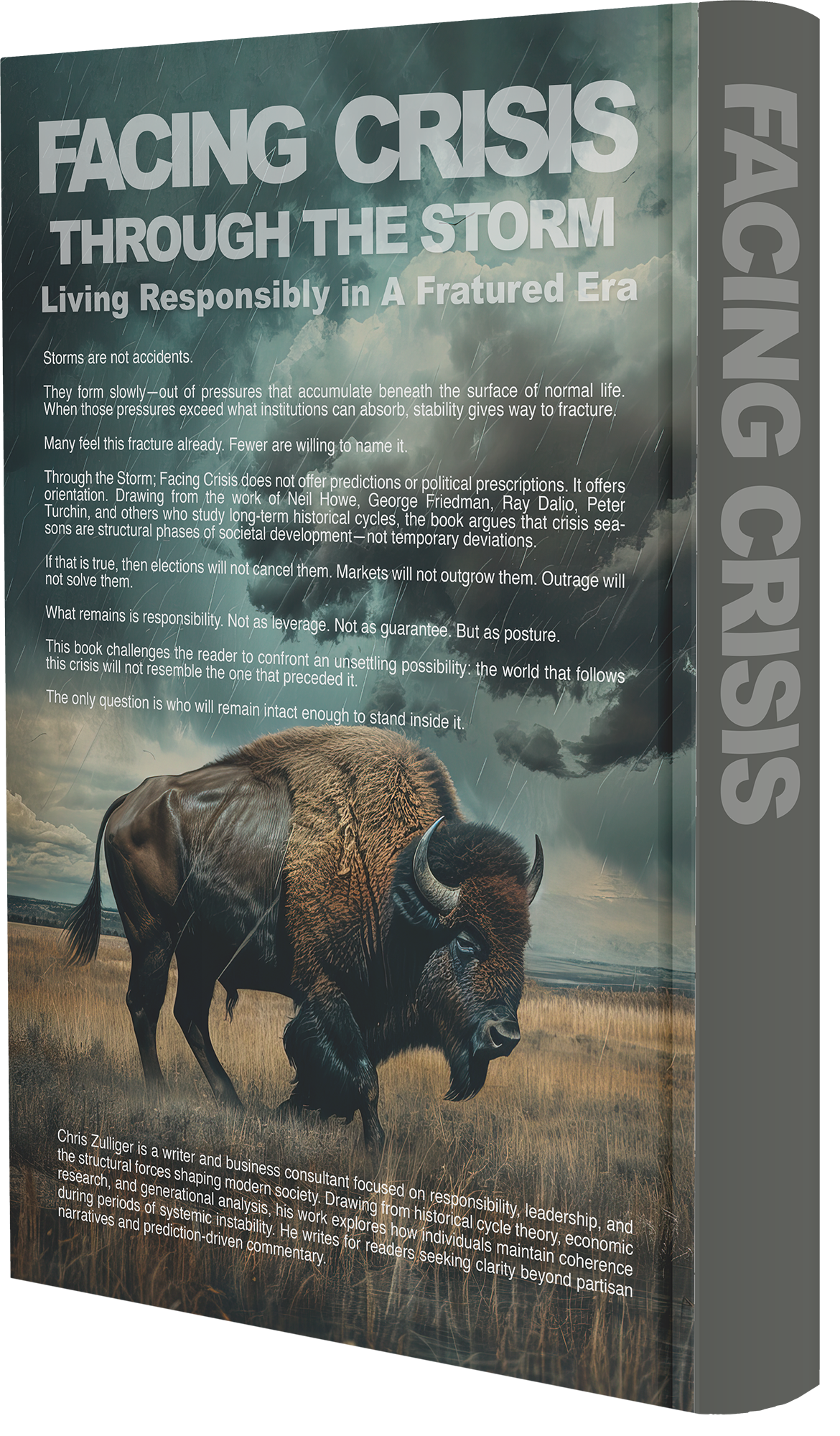
“In a fierce prairie storm, cattle often get spooked, turn tail and run from it. Getting divided and lost. But buffalo herd closely together and go into the storm head on, coming out of it faster, stronger and united.” — Source
The book is about understanding the forces and patterns which create crisis seasons and accepting that hard times are a function of growth and renewal.
“The greatest benefit to recognizing patterns is that it gives you a pathway to power, and a ladder out of chaos.” — Tony Robbins
The concepts presented will strip away blame and divisive rhetoric and explore how to live responsibly through the storm. Not with social commentary and rage but by personal examination and proactive engagement.
Most importantly, understanding how we stand—as individuals and collectively, will impact the generations born into this fractured era.
We do not choose the circumstances we inherit.
We are responsible for how we stand within them.
ABOUT THE AUTHOR:
Facing Crisis began as a personal effort to understand the forces shaping our current moment.
Chris Zulliger is a business consultant and systems analyst. His work is centered around business systems optimization.
He has turned his time and experience to strengthening systems closer to home. The personal operating systems upon which all else is built.
This book was created to answer pressing questions rising from failing institutional and government systems. The effects of which now strike sharply in most American homes.
His research and focus for this book explores responsibility under pressure, formation during crisis, and the difference between commentary and participation when systems strain and outcomes are uncertain.
A 30-second Reader Poll
Your responses helps guide the development of this book.
This is not a mailing list sign-up.
*All Survey and Poll responses may be used in aggregated and anonymous form for research, analysis, or discussion related to this project.